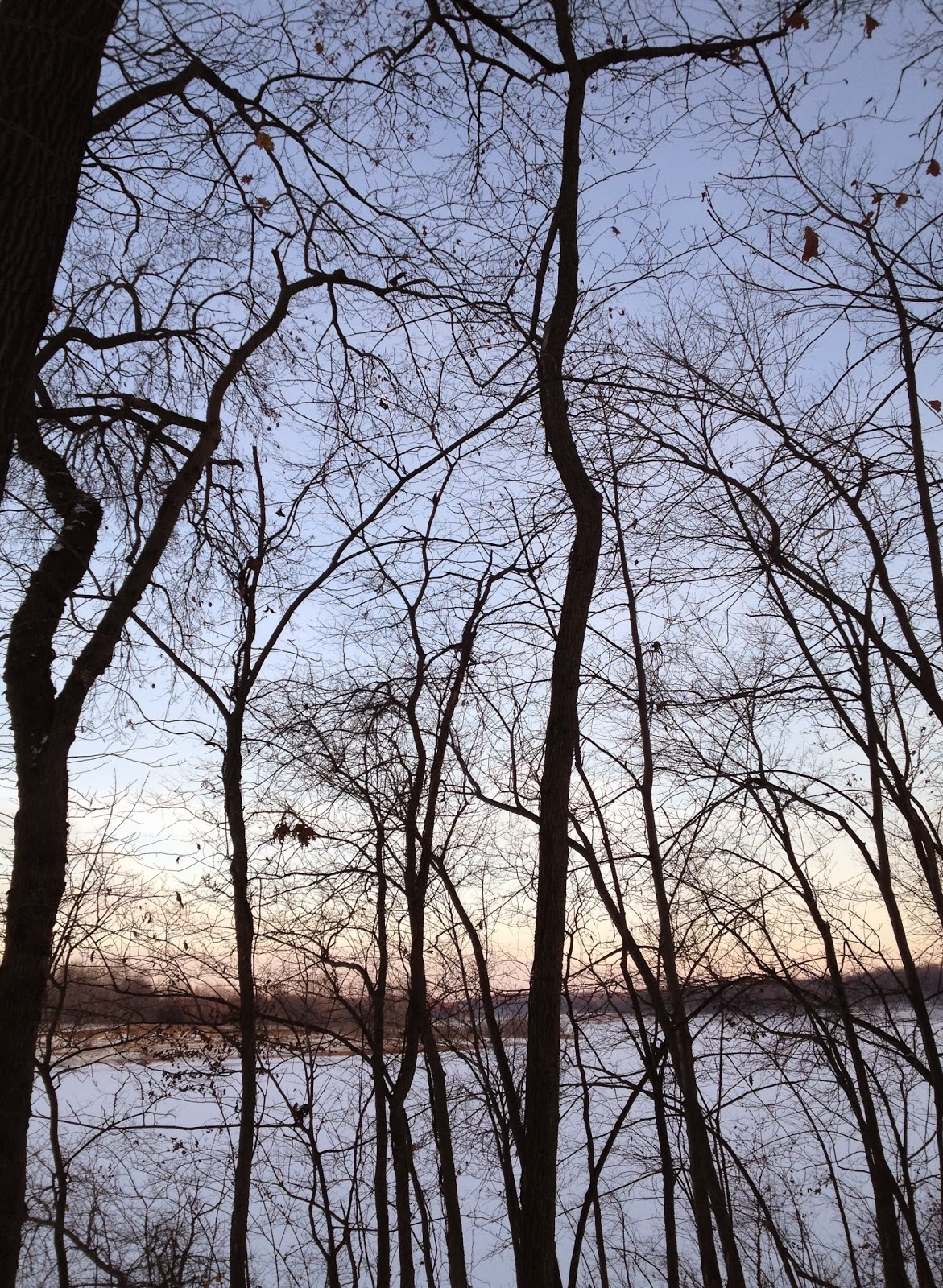
December 13, 2013: December Lace


What a show,  those lacy treetops in December. Photo taken yesterday late afternoon by the Coralville Reservoir.

December 12: Everyday is Good


"The present moment is filled with joy and happiness. If you are attentive, you will see it," wrote Thich Nhat Hanh in Peace in Every Step: The Path of Mindfulness in Everyday Life. He must have learned that from Zoey and Hazel. They know that everyday is good.

December 1, 2013: Putting Passions into Play

Thank you to guest illustrator Xine Kathryn


“Take up one idea. Make that one idea your life—think of it, dream of it, live on that idea. Let the brain, muscles, nerves, every part of your body, be full of that idea, and just leave every other idea alone. This is the way to success.”  --Swami Vivekananda (1863-1902), an Indian Hindu monk who helped introduce yoga to the Western world

Over 100 years since Vivekananda’s words above, neuroscience research is telling us that, indeed, there’s something to be said for thinking, dreaming, and living our passions. Visualizing ourselves doing something well can lead to success. For example, golfers who visualize practicing improvements in their swing can actually improve their performance.

Janet Bray Attwood and Chris Attwood, in The Passion Test: The Effortless Path to Discovering Your Passions (Penguin Group, 2008), assert that living our passions entails setting intentions and giving our passions attention. However, there should also be no tension – no straining.  Creating intentions and putting your attention on them, they say, should be “simple, easy, effortless process” (p. 58).

For us neuroscience geeks, the book offers passages that delve into the science of why this approach of “intention,”  “attention,” and “no tension” works. Interestingly, it has to do with what Swami Vivekandna told us over a hundred years ago, before neuroscience research came into its own: “the brain, muscles, nerves, every part of your body.”
October 15, 2013: Back to the Basics

A death or sickness in the family, an unexpected hurdle in a work project, an unrealized dream with no clear path forward. These external stressors are part of living. Called by Buddhists the "first arrow," these sources of suffering are often beyond our control. But we can work to control the slinging of the "second arrow":  our own graspings, aversions, and delusions that so often follow those first arrows. If we're not careful, these second arrows can quickly fan the flames of suffering. But it is in us to be peaceful in all circumstances. Even if we're already wound up about it all, it's not too late to begin again. It starts with remembering to breathe. 

September 8, 2013: I love you, world.

For years, I've noticed one of my dearest friends straighten her posture occasionally when deep in conversation with a group. I thought it was just because she's a yoga practitioner with a particular awareness of her spinal alignment. But she told me recently that she does that to remind herself to keep her heart open to others. Here's a similar practice: when you find yourself taking someone for granted -- or your work or home or life -- say to yourself (or out loud if no one's listening): "I love you, C" or "I love you, work, " or "I love you, world." It too opens the heart.

August 26, 2013: Yellows everywhere


In the prairie strip nearby: yellows, yellows, cheerful, exhilarating yellows. Yellow cone flowers whose time to shine has actually passed but they keep hanging on; sunflowers and goldenrod in full and ample bloom in spite of the heat; goldfinches flying in for the bounty, yellow  on yellow. Free gifts everywhere we look.